By your situation
Trading In Your Current Car
Trading in your current car can reduce what you pay for your next one—but the “trade-in value” can be handled differently by each dealer. Learn how trade-ins work and how to get a fair deal, then get matched with local dealers for free.
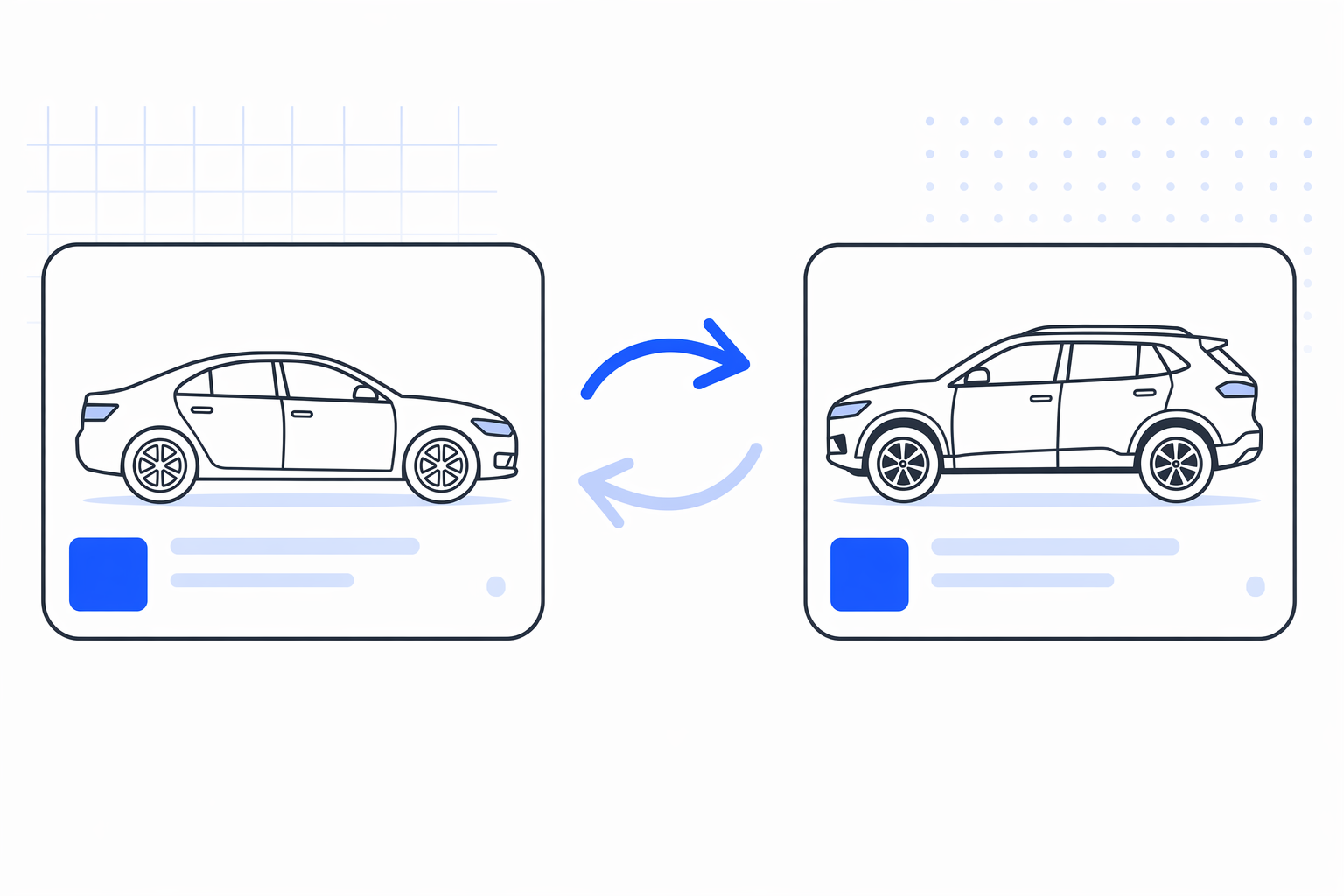
Learn how dealers set trade-in values, ask the right questions, and compare out-the-door totals—then get matched with free local used-car dealers to discuss your trade-in.
How a trade-in works (the simple version)
When you trade in a car, you bring it to a dealership that’s selling another vehicle. The dealer then uses your trade-in as part of the deal price for the car you want to buy.
In many transactions, there are two separate numbers: (1) the value the dealer assigns to your trade-in, and (2) the price/financing terms of the vehicle you’re buying. Those numbers should be clear and consistent so you can understand what you’re getting.
A key point: CarMatchLane is not a dealer and not a lender. We help you find and get connected with local used-car dealers who can discuss your trade-in and your next purchase. Any offer depends on the car’s condition, mileage, title status, and local market.
- Trade-in value is about your car—not about your credit.
- Your final deal should show both the trade-in and the purchase price.
What determines your trade-in value
Trade-in value is usually based on several items, like year, make, model, trim, mileage, and overall condition. Dealers also consider whether the car has accidents, major repairs, missing parts, and how it drives.
Small issues can matter more than people expect. Worn tires, a cracked windshield, check-engine lights, non-working features (A/C, power windows, navigation), and interior damage can reduce value. Service records can sometimes help, especially if they show regular maintenance.
Because values vary by local inventory and timing, you may see different offers at different dealers. That’s normal. The best approach is to compare offers and ask for details.
If you’re unsure what issues to look for, start with a used-car inspection checklist and take clear photos before you visit dealers: how to inspect a used car.
Fair vs. unfair deals: how to spot hidden problems
Sometimes a trade-in “looks” good because the purchase price is higher—or because the dealer uses a vague description of the car you’re trading in. Other times, the trade-in number may be lower than expected, while the buyer focuses only on the monthly payment.
To avoid getting blindsided, ask for the trade-in offer and the out-the-door price in writing. “Out-the-door” usually means the full total you’ll pay, including taxes and fees. Also ask whether any add-ons are required or optional.
Watch for red flags like:
- The dealer won’t show how they arrived at the trade-in condition.
- The final documents don’t match the verbal quote.
- They focus only on monthly payments instead of total cost.
CarMatchLane can connect you with local dealers, but you still control the shopping. You can take your time, compare offers, and insist on clear paperwork.
If financing is part of the plan, remember that APR and the total cost matter—not just the payment. Even if a trade-in lowers the amount you finance, the interest rate affects the total you pay over time.
Steps to get the best trade-in offer (without stress)
Before you visit dealers, gather the basics: your car’s title status (do you have the title?), current mileage, VIN (if you have it), and proof of maintenance if available. Clear records can help you avoid surprises and may support your condition claims.
Next, prep the car. A simple cleaning, a quick test of key features (lights, wipers, A/C, brakes feel), and fixing small “obvious” issues (like replacing missing floor mats if you have them) can help the car look well-cared-for. You don’t need a full remodel—just be honest about condition and make it easy to evaluate.
Bring the car to the dealer with realistic expectations. If the dealer’s inspection finds problems you didn’t mention, you’ll see the value change. That’s part of the process.
Finally, compare. Visit more than one local dealer and ask the same questions each time so you can compare apples to apples. You can also plan around costs by reviewing typical expenses and what to expect: trade and buying costs.
- Ask for the trade-in value, purchase price, and out-the-door total in writing.
- Compare offers at more than one dealer—values vary.
Questions to ask the dealer during a trade-in
Use these questions to keep everything clear. You can copy/paste them or take them to your appointment:
- “What exact condition are you using for my trade-in (tires, brakes, body condition, mechanical issues)?”
- “Can you show me how you calculated the trade-in value and what would change it?”
- “What’s the purchase price for the vehicle I’m buying before trade-in?”
- “What are the taxes, fees, and any add-ons? Which are optional?”
- “What is the out-the-door total?”
If you’re offered add-ons, ask what happens if you remove them. If something is required, ask why. Never sign paperwork you don’t understand.
If the dealer is discussing financing terms, ask to see the financing details on paper so you can review APR and total cost. No one can guarantee approval, and the exact deal terms depend on you and the specific car.
CarMatchLane’s role is to help you find local used-car dealers to talk with—free for you—so you can shop with confidence.
Get matched with local used-car dealers (free) and plan your next steps
When you use CarMatchLane, you share what you want in a next vehicle and key details about your current car for the trade-in (like year/make/model, approximate mileage, and general condition). We collect contact and preferences only—never SSN/ITIN numbers, driver’s license numbers, or bank/credit-card/account numbers.
Then we connect you with local used-car dealers so you can compare trade-in offers and vehicle options in your area. Dealers will inspect the trade-in in person and confirm details.
If you want to move faster, get ready with: photos of your current car, a list of known issues, and a target budget for the car you’re buying. Start here: get matched.
- Free service for buyers—CarMatchLane does not sell cars or finance vehicles.
- Approval and rates aren’t guaranteed; they depend on the buyer, lender, and car.
Common questions
Should I get my trade-in value before I choose a car?
Yes—often you’ll get a clearer sense of what budget range you can comfortably shop in. Trade-in offers can vary by dealer and by the specific car you want, so it’s still smart to compare.
Can the dealer change the trade-in offer after inspection?
They can, especially if they find differences in condition (mechanical issues, damage, missing parts, tire/brake wear, or check-engine alerts). That’s why you should ask what condition they’re using and request the offer details in writing.
Is it okay if a monthly payment looks good but the trade-in value is low?
It can be misleading. Monthly payments depend on the vehicle price, amount financed, APR, and loan term. Ask for the out-the-door total and financing terms so you can compare the full cost, not just the payment.
What documents should I bring for a trade-in?
Bring your title (or proof of title status), any available service records, and be ready to confirm mileage and vehicle details. If you don’t have the title, tell the dealer upfront so they can explain your options.
Does CarMatchLane negotiate or guarantee a trade-in offer?
No. CarMatchLane is free and connects you with local used-car dealers, but the dealer sets trade-in value based on inspection and condition. There’s no guaranteed outcome, and the final deal depends on many factors.
Get matched with local dealers — free
Always inspect a used car yourself or with a trusted mechanic, read the vehicle history report, and review the price and financing in writing before you sign.
Get matched, free
Looking for a used car right now?
Get matched, free, with local dealers near you. You compare the out-the-door price and the financing, inspect the car, and choose who to buy from — no pressure, no SSN, no guaranteed-approval gimmicks.