Buying guides
How to Inspect a Used Car Before You Buy
Use this simple walk-around before you buy a used car. It can help you spot warning signs, ask better questions, and decide when to walk away.
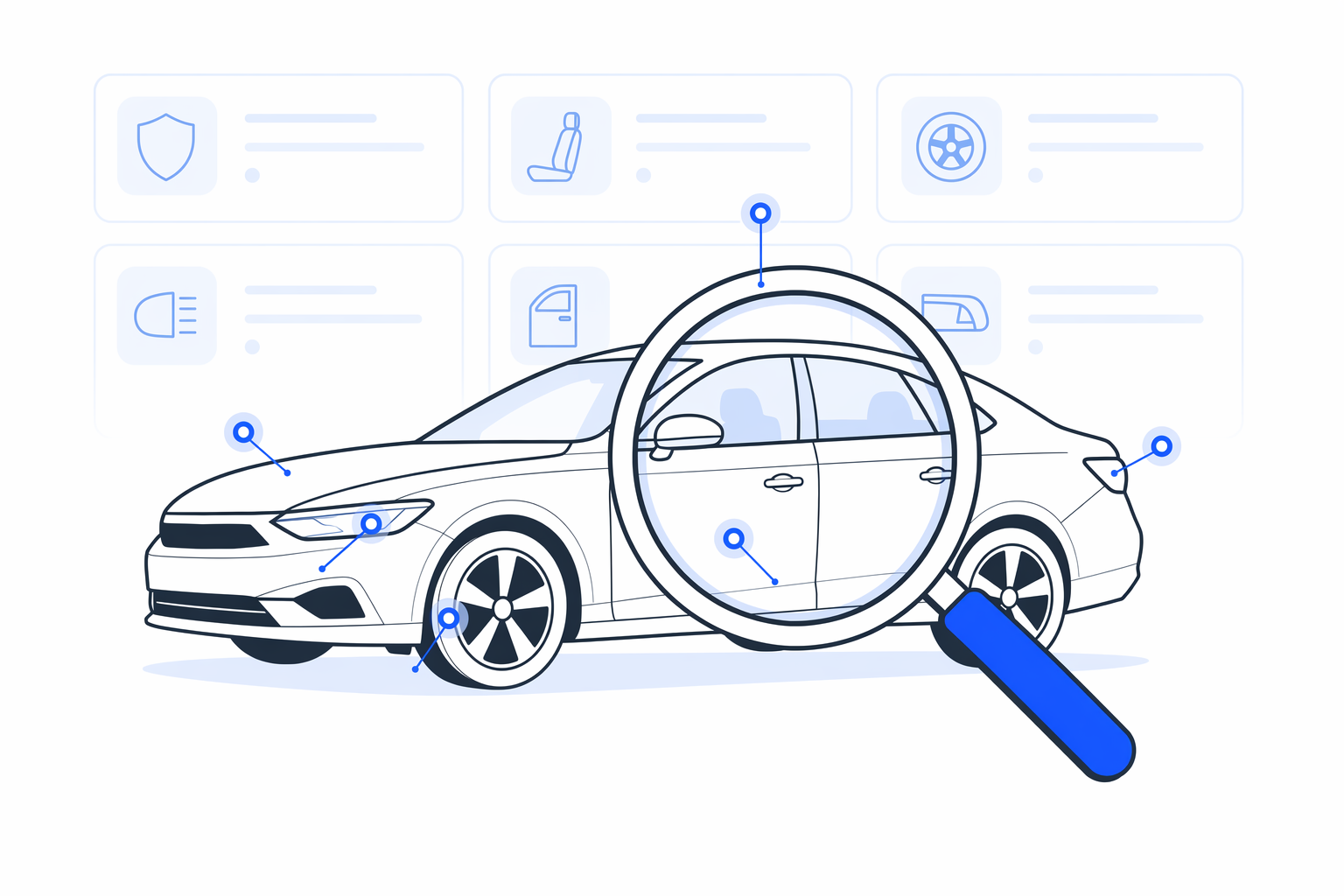
Check the car’s body, tires, engine, test drive, and dashboard lights before you buy, and always get the full price and loan terms in writing.
Start with the outside
Look at the car in good daylight if you can. Check the paint, doors, bumpers, and panels for uneven gaps, fresh paint, rust, dents, or signs that parts do not line up. Those can be clues that the car was in an accident or had poor repairs.
Look at the windshield and windows for cracks or chips. Open and close every door, the trunk, and the hood. They should work smoothly. If anything feels stuck, loose, or bent, ask why before you go further.
Stand back and look at the car from the front, side, and rear. It should sit level. A car that leans or looks uneven may have suspension or frame problems.
Check the tires and wheels
Tires can tell you a lot about how a car has been cared for. Look for deep tread, even wear, and matching tires on all four corners if possible. Tires that are worn on one edge, or worn much more on one side than the other, can point to alignment or suspension trouble.
Check for cracks, bulges, or dry rot on the sidewalls. These are safety issues. Also look at the wheels for bends or heavy curb damage. If the spare tire is included, ask to see it and make sure the jack and tools are there too.
If the tires look very old or nearly worn out, factor replacement into the total cost. A low price on the car can be misleading if you will need new tires right away. For more on budgeting, see used-car costs.
Open the hood and look for warning signs
You do not need to be a mechanic to spot obvious problems. Look for fluid leaks, loose hoses, damaged belts, corrosion on the battery, and dirty or milky oil. A strong burnt smell, fresh leaks, or parts that look taped together are red flags.
Ask when the oil was last changed and whether the car has service records. If the seller says “it’s fine” but cannot show basic maintenance history, be cautious. A well-kept car often has at least some proof of regular care.
If the engine is already hot when you arrive, ask why. A warm engine can hide starting problems, smoke, or rough idle. It is fair to ask for a cold start so you can hear and feel how it behaves from the beginning.
Do a real test drive
Never skip the test drive. Drive on streets, not just around the block. If possible, include a stop-and-go area, a faster road, and a few turns. Listen for odd noises like grinding, clunking, squealing, or humming.
Pay attention to how the steering feels. The car should track straight without pulling hard to one side. Brakes should feel firm and smooth, not shaky or soft. The transmission should shift cleanly. If the car jerks, slips, or hesitates, that can mean expensive repairs.
Try the heating and air conditioning, lights, turn signals, windows, locks, wipers, radio, and backup camera if it has one. Small problems add up, and electrical issues can be a sign of bigger trouble.
Watch the dashboard and the paperwork
When you start the car, warning lights should turn on briefly and then go off. A check engine light, airbag light, ABS light, or battery light that stays on needs an explanation. Ask what code is showing and whether the car was repaired correctly.
Also look at the mileage, title status, and VIN on the dash, door sticker, and paperwork. They should match. Ask for a vehicle history report and any repair records the seller has. If the title is not clear, or the paperwork does not match the car, walk away.
Before you agree to anything, ask for the out-the-door price and financing terms in writing. That means the full price, fees, taxes, APR, loan length, and total amount you would pay. For a simple checklist on how to compare offers, see what costs to ask about.
Know when to walk away
Some issues are worth a lower offer. Others are not worth the risk. If the seller will not let you inspect the car, rushes you, changes the story, or will not put key details in writing, that is a sign to stop.
A car with multiple warning lights, major rust, signs of flood damage, frame damage, or heavy oil smoke may cost more to fix than it is worth. Trust your eyes, your ears, and your gut.
If you are buying your first car, it can help to slow down and use a checklist. Our first-time car buyer guide can help you think through the next steps. If you want help finding local used-car dealers, we connect you with dealers and the service is free for buyers.
Common questions
Should I bring a mechanic with me?
If you can, yes. A pre-purchase inspection by an independent mechanic can catch problems that are easy to miss. It is usually worth the cost, especially on an older car or a car with no clear service history.
What dashboard lights are a dealbreaker?
A check engine light, airbag light, ABS light, or a light the seller cannot explain is a serious warning sign. It does not always mean walk away right away, but you should get the problem explained in writing and consider a professional inspection before buying.
Can I inspect the car if I have bad or no credit?
Yes. Credit does not change your right to inspect the car carefully. If you need help finding local dealers, we can connect you with dealers, but no one can promise approval or a certain rate.
What should I ask for before I sign anything?
Ask for the out-the-door price and all financing terms in writing, including APR, monthly payment, loan length, fees, and total cost. That helps you compare offers and avoid surprises later.
Get matched with local dealers — free
Always inspect a used car yourself or with a trusted mechanic, read the vehicle history report, and review the price and financing in writing before you sign.
Get matched, free
Looking for a used car right now?
Get matched, free, with local dealers near you. You compare the out-the-door price and the financing, inspect the car, and choose who to buy from — no pressure, no SSN, no guaranteed-approval gimmicks.