Compare
Buying From a Dealer vs a Private Seller
Buying from a dealer and buying from a private seller can both work. The best choice depends on your budget, comfort with paperwork, and how much help you want with the process.
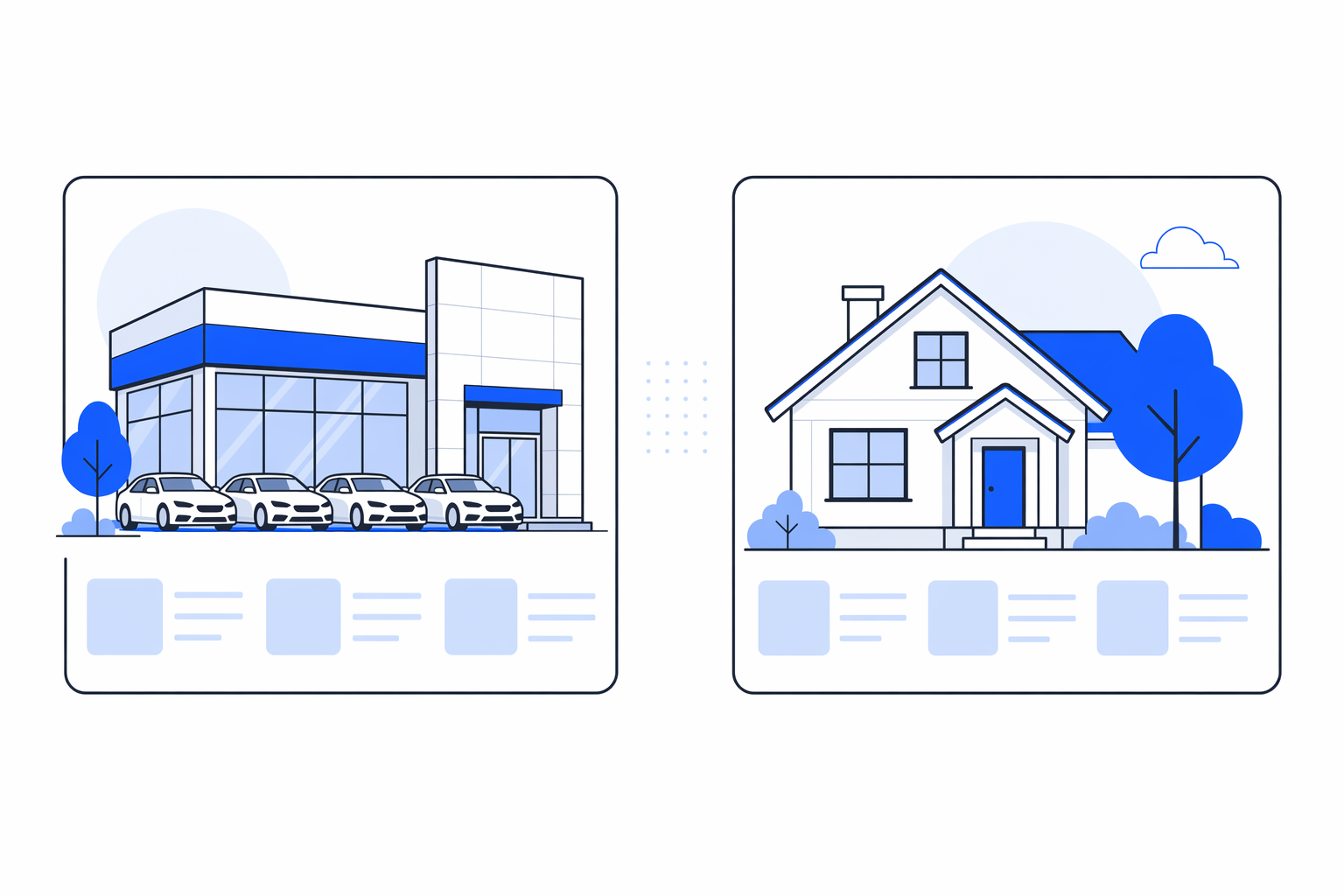
Dealers usually offer more help and paperwork support, while private sellers may cost less up front but require more caution and self-checking.
Quick difference: dealer vs. private seller
A dealer is a business that sells cars. A private seller is the car’s owner. Dealers usually offer more structure, more paperwork help, and sometimes more financing options. Private sellers may have lower asking prices, but the process is usually more on you.
With a dealer, you can often see more vehicles in one place and ask about title transfer, registration steps, and available financing. With a private seller, you may get a better deal up front, but you also need to check the car, the title, and the payment process more carefully.
CarMatchLane does not sell cars, set prices, or approve loans. We help you find local used-car dealers and learn what to ask before you buy.
Price, fees, and total cost
Private sellers often list lower prices because they do not have dealership overhead. But the lowest sticker price is not always the lowest total cost. You may still need to pay taxes, title and registration fees, inspection costs, repairs, and possibly towing or transport.
Dealers may charge more than a private seller, but you may get a cleaner process, more paperwork support, and possibly options like service contracts or financing. That does not mean the dealer deal is always better. It means you should compare the out-the-door price, not just the monthly payment or the asking price.
Ask for the full cost in writing before you agree to anything. If you are comparing offers, use used car cost basics to understand what can be added on top of the price.
Paperwork, title, and protections
A dealer usually handles more of the paperwork for you. That can make the sale easier, especially if you are a first-time buyer or new to the US. Dealers may also be required to follow more consumer rules than a private seller, depending on the state.
Private sales can be simpler on paper, but they also carry more risk if the title is not clean, the car has unpaid issues, or the seller does not know the steps for transfer and release of liability. Always make sure the name on the title matches the seller, and do not hand over money until you understand the documents.
Rules vary by state, so it helps to check your local DMV or ask a trusted local dealer how title transfer works where you live.
Financing: where the difference matters most
Dealers may be able to connect you with financing options through lender partners, which can be helpful if you have bad credit, no credit, or are an ITIN buyer. But no one can promise approval, and the rate, term, down payment, and total cost depend on your credit profile, the lender, and the car.
Private sellers usually do not offer financing. That means you may need cash, a credit union, a personal loan, or another outside option. If you are comparing loan offers, look at APR, the total amount you will pay, and the full payment schedule — not just the monthly payment.
CarMatchLane helps you connect with local dealers that may have financing options. We do not lend money or approve loans, and we never ask for your SSN, ITIN, bank details, or credit card numbers.
Inspection and condition checks
No matter who you buy from, inspect the car carefully. A private seller may give you less paperwork, so a good inspection matters even more. A dealer car can also have problems, so do not skip the test drive, the vehicle history check, and an independent inspection if you can.
Look for signs of leaks, warning lights, strange noises, uneven tire wear, rust, and mismatched body panels. Bring a friend if you want another set of eyes. If you are unsure what to check, use how to inspect a used car as a simple step-by-step guide.
A clean-looking car is not always a good car. Take your time and do not feel rushed.
Which option may fit you better?
A dealer may be a better fit if you want more structure, help with documents, or a chance to look at financing options. That can be especially useful for first-time buyers and people who want more guidance in English.
A private seller may be a better fit if you are comfortable checking the car yourself, handling the paperwork, and paying with cash or outside financing. You may find lower asking prices, but you take on more of the risk and responsibility.
If you want help finding local dealers and understanding your options, you can get matched. The service is free for buyers, and we only collect contact information and the basic details of what you want in a car.
Common questions
Is it cheaper to buy from a private seller or a dealer?
A private seller often has a lower asking price, but that does not always mean a lower total cost. Dealers may charge more, but they may also offer more paperwork support, financing options, or other services.
Is financing easier through a dealer?
Sometimes, but not always. A dealer may help you connect with financing options, but approval is never guaranteed and depends on the lender, the vehicle, and your situation.
What should I ask for before I agree to buy?
Ask for the out-the-door price, the title status, any fees, and the financing terms in writing. For a private seller, also ask who owns the car and whether there are any known issues.
Does CarMatchLane sell cars or give loans?
No. CarMatchLane is not a dealership, lender, broker, or financial advisor. We help you find local used-car dealers and learn what to check before you buy.
Get matched with local dealers — free
Always inspect a used car yourself or with a trusted mechanic, read the vehicle history report, and review the price and financing in writing before you sign.
Get matched, free
Looking for a used car right now?
Get matched, free, with local dealers near you. You compare the out-the-door price and the financing, inspect the car, and choose who to buy from — no pressure, no SSN, no guaranteed-approval gimmicks.