Compare
Buying New vs Used — An Honest Comparison
New and used cars each have tradeoffs. This guide compares price, depreciation, warranty, and total cost so you can choose what fits your budget and your risk comfort.
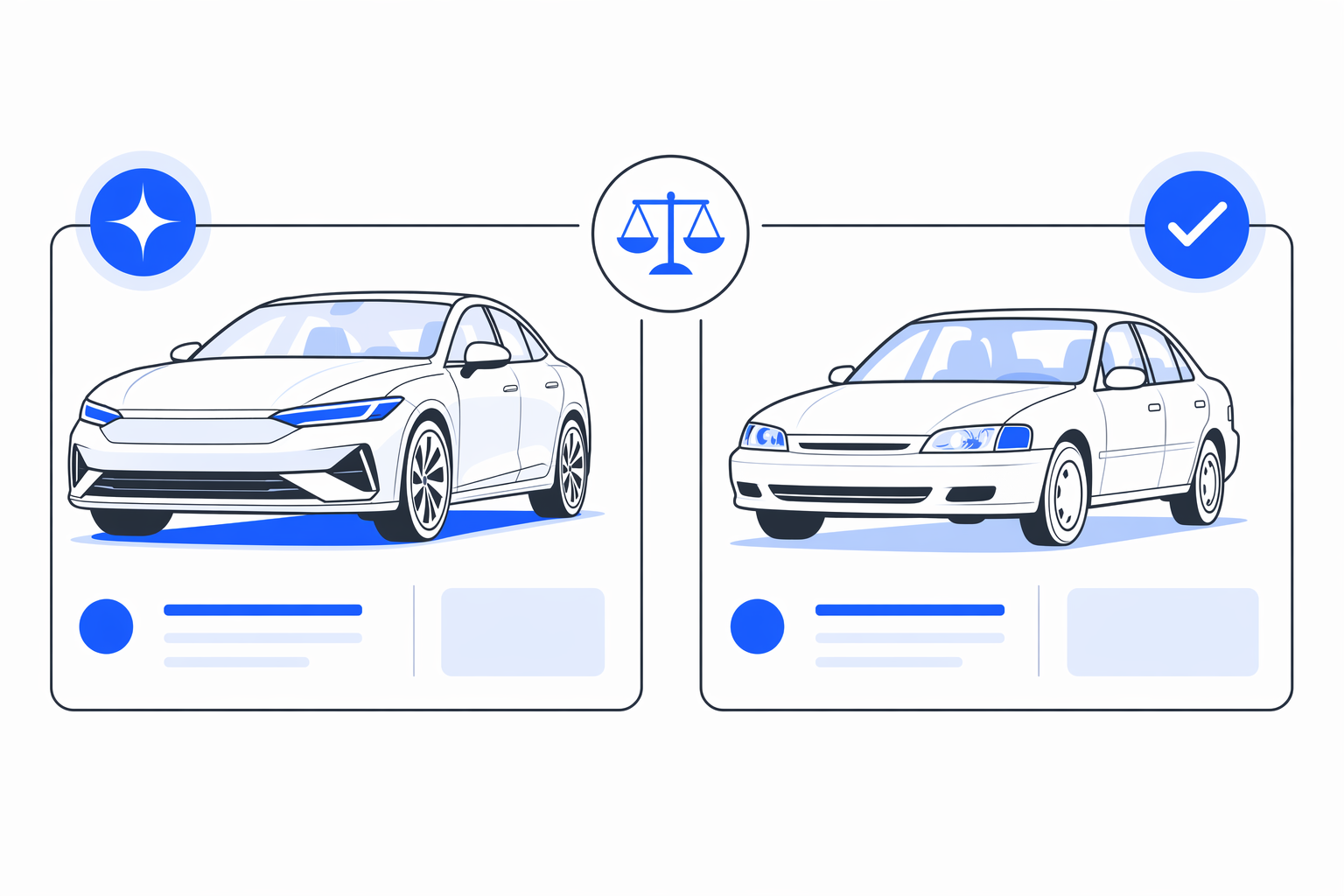
New cars cost more but usually come with more warranty and less early repair risk; used cars cost less up front but need more checking, so compare total cost, not just the payment.
The big difference: value loss vs lower price
A new car usually costs more up front, but it comes with zero prior miles and full manufacturer coverage at the start. The biggest cost issue is depreciation, which means the car can lose value quickly in the first few years.
A used car usually costs less to buy, and someone else has already taken the biggest depreciation hit. That can make used a better fit if you want a lower payment, lower sales tax in some places, or a cheaper out-the-door price.
If you are comparing both, do not focus only on the monthly payment. Look at the total price, taxes, fees, insurance, maintenance, and how long you plan to keep the car.
When new may make more sense
Buying new can be a good choice if you want the latest safety features, a full warranty, and fewer surprise repairs in the first years. It can also help if you plan to keep the car a long time and want a known service history from day one.
New can be easier for buyers who do not want to spend time checking past ownership, accident history, or wear. For some people, that peace of mind is worth the higher price.
Still, new does not mean cheap to own. You may pay more for insurance, registration, and depreciation. Ask for the full out-the-door price in writing before you decide.
When used may make more sense
Buying used often helps if your budget is tight or you want to avoid the fast value drop that comes with a new car. A used vehicle can give you more car for the money, especially if you shop carefully and compare several options.
Used can also be a practical choice for first-time buyers, buyers with limited credit history, ITIN buyers, and new immigrants who want a lower-cost path to ownership. At CarMatchLane, we help you find local used-car dealers, and our service is free for buyers.
But used cars need more checking. Wear, accident history, tires, brakes, and past repairs can all affect what you really pay over time. If you are shopping used, use this inspection guide and ask for records when available.
Warranty, repairs, and peace of mind
A new car usually has a manufacturer warranty at the start, which can lower repair risk early on. That can be helpful if you need predictable costs and want fewer surprises.
A used car may still have some warranty left, but often less than a new one. Some used cars are sold as-is, which means you may be responsible for repairs after purchase unless a dealer offers a written warranty or service contract.
Before you sign anything, ask what is covered, how long it lasts, and what is not included. Get every promise in writing. If financing is part of the deal, remember that APR and the total cost of the loan matter, not just the monthly payment.
A simple way to compare your choices
Start with your real budget, not the maximum payment someone suggests. Compare the out-the-door price, estimated insurance, expected maintenance, and how long you plan to keep the car.
Then decide what matters most to you: lower upfront cost, lower repair risk, or longer warranty coverage. There is no single best answer for everyone.
If you want help finding local used-car dealers after you decide what kind of car fits your needs, get matched here. We only collect contact details and what you are looking for — not SSN, ITIN, driver’s-license numbers, bank or credit-card numbers, or credit reports.
Common questions
Is a used car always cheaper than a new car?
Usually the purchase price is lower, but not always the total cost. A used car may need more repairs, while a new car may cost more in depreciation, insurance, and taxes.
Does a new car always have better financing?
No. Approval, APR, and terms depend on the buyer, the lender, and the vehicle. No one can guarantee approval, so compare the full loan cost in writing before you agree.
How do I avoid paying too much?
Ask for the out-the-door price, review all fees, and compare the total cost of ownership over time. If financing is involved, check the APR, loan length, and total amount paid, not only the monthly payment.
Can CarMatchLane help me buy a new car too?
CarMatchLane helps connect buyers with local used-car dealers, not sell cars or arrange loans. If you are considering used, we can help you find local dealer options that fit what you want.
Get matched with local dealers — free
Always inspect a used car yourself or with a trusted mechanic, read the vehicle history report, and review the price and financing in writing before you sign.
Get matched, free
Looking for a used car right now?
Get matched, free, with local dealers near you. You compare the out-the-door price and the financing, inspect the car, and choose who to buy from — no pressure, no SSN, no guaranteed-approval gimmicks.