Buying guides
How to Read a Vehicle History Report
A vehicle history report can help you spot problems before you buy a used car. It is useful, but it is not perfect, so you should read it carefully and still inspect the car in person.
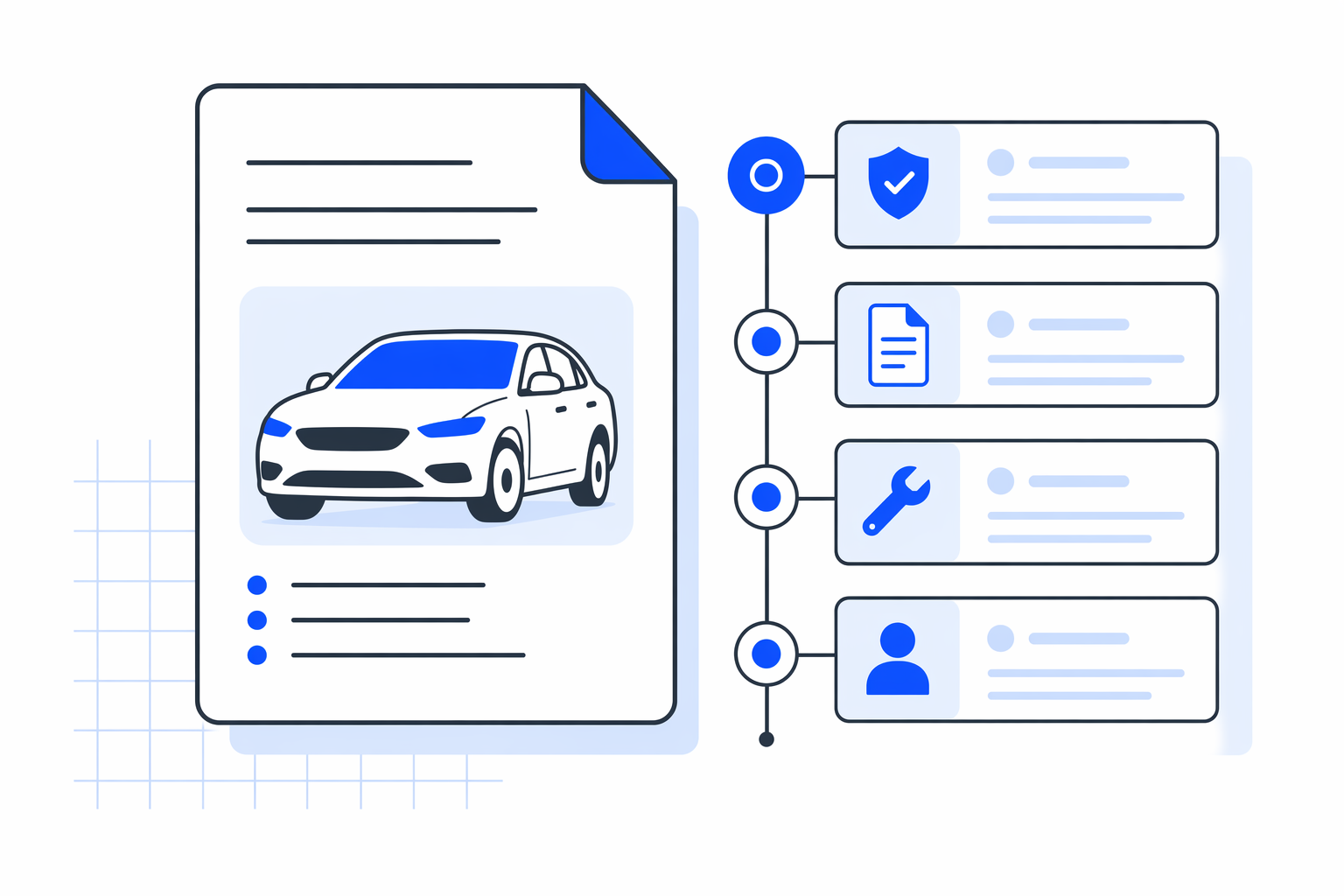
Read the title, mileage, damage history, and ownership records, and use the report to spot red flags before you buy.
What a vehicle history report is
A vehicle history report is a record pulled from many sources, such as title records, insurance claims, auctions, repair shops, and service events. It may show past accidents, title brands, odometer readings, ownership changes, and where the car was registered.
It is one tool to help you compare cars. It does not replace a test drive, a mechanic inspection, or the final sale paperwork. If something looks missing or unclear, ask the dealer to explain it in writing.
If you are new to used-car shopping, it can help to learn the rest of the process too. Our first-time buyer guide explains how to slow down, compare choices, and avoid common mistakes.
Key sections to check first
Start with the title status. A clean title is usually better than a branded title, but a clean title does not mean the car has never had damage. Look for title brands like salvage, flood, rebuilt, lemon buyback, or junk, because those can affect safety, resale value, and lender interest.
Next, check the odometer history. The mileage should usually move forward in a steady way. Big jumps, missing readings, or a lower number after a higher one can be a warning sign.
Then review prior use and ownership. A rental car, fleet car, or commercial vehicle may have seen more miles or harder use. That is not always bad, but it helps explain wear.
Red flags that deserve extra caution
An accident on a report is not always a dealbreaker. Small repairs happen. What matters is how serious the damage was, whether the frame or airbags were affected, and whether the repairs were done well.
Be careful if you see flood damage, fire damage, salvage history, repeated damage claims, or long gaps in the record. A car that was in a flood can have hidden electrical and safety problems that show up later.
Also watch for gaps in mileage history, title transfers across far-away states with no clear reason, or a report that looks too thin for the car’s age. Missing data does not always mean something is wrong, but it does mean you should ask more questions.
How to read the report with the car itself
Match the report to what you see in person. If the report says the car was damaged on the front passenger side, look for uneven paint, replaced parts, misaligned panels, warning lights, or airbag signs. If the mileage looks low for the age, check the wear on the pedals, steering wheel, seats, and tires.
Always ask for the out-the-door price in writing, along with any financing terms, before you agree to anything. The monthly payment is only part of the cost. APR, fees, term length, and total amount paid all matter.
If you want help finding local used-car dealers to compare options, you can get matched with dealers in your area. We are free for buyers and we only collect contact details and what you want in a car — not SSN, ITIN, driver’s license numbers, bank details, or credit card numbers.
What the report cannot tell you
A vehicle history report cannot show every repair, every accident, or every problem. It may miss damage that was never reported, work done at small shops, or wear-and-tear items like brakes, suspension parts, and tires.
It also cannot tell you whether the car fits your budget. Before you buy, look at the full cost: the price, taxes, registration, insurance, gas, repairs, and financing charges if you borrow money. Our costs guide can help you plan ahead.
Use the report as a warning light, not a final answer. If the history, the inspection, and the price all line up, you may be looking at a better choice. If not, it is okay to walk away.
Common questions
Is a clean vehicle history report enough to buy the car?
No. A clean report is helpful, but it does not prove the car has no damage or hidden problems. You should still test drive it and, if possible, have a mechanic inspect it.
Should I avoid any car with an accident on the report?
Not always. A minor accident with good repairs may be acceptable, but major damage, frame issues, airbag deployment, or repeated claims are bigger concerns. Ask for repair records and use caution.
What if the dealer says the report is wrong?
Ask for proof in writing, such as repair records, title documents, or inspection notes. If the story does not make sense, do not feel rushed to buy.
Can CarMatchLane tell me if a car history report is good or bad?
We do not inspect cars or approve deals. We help connect you with local used-car dealers, and you should always review the history report, inspection, price, and financing terms yourself.
Get matched with local dealers — free
Always inspect a used car yourself or with a trusted mechanic, read the vehicle history report, and review the price and financing in writing before you sign.
Get matched, free
Looking for a used car right now?
Get matched, free, with local dealers near you. You compare the out-the-door price and the financing, inspect the car, and choose who to buy from — no pressure, no SSN, no guaranteed-approval gimmicks.